Erythema BSA involvement was associated with*:

33%
greater risk of nonrelapse mortality

(HR, 1.33; 95% CI, 1.19-1.48; P<0.001)2

28%
greater risk of death per 10% increase in BSA

(HR, 1.28 per 10% increase in BSA; 95% CI, 1.14-1.44; P<0.001)2

 
Dr Preet M. Chaudhary

In practice, we monitor skin disease as a surrogate for disease progression—as GVHD is a systemic disease—and take an assertive approach with Jakafi treatment to help halt that progression.

Preet M. Chaudhary, MD, PhD, GVHD Expert

*In the chronic GVHD Consortium, a multicenter prospective cohort study of 469 patients with cGVHD.2

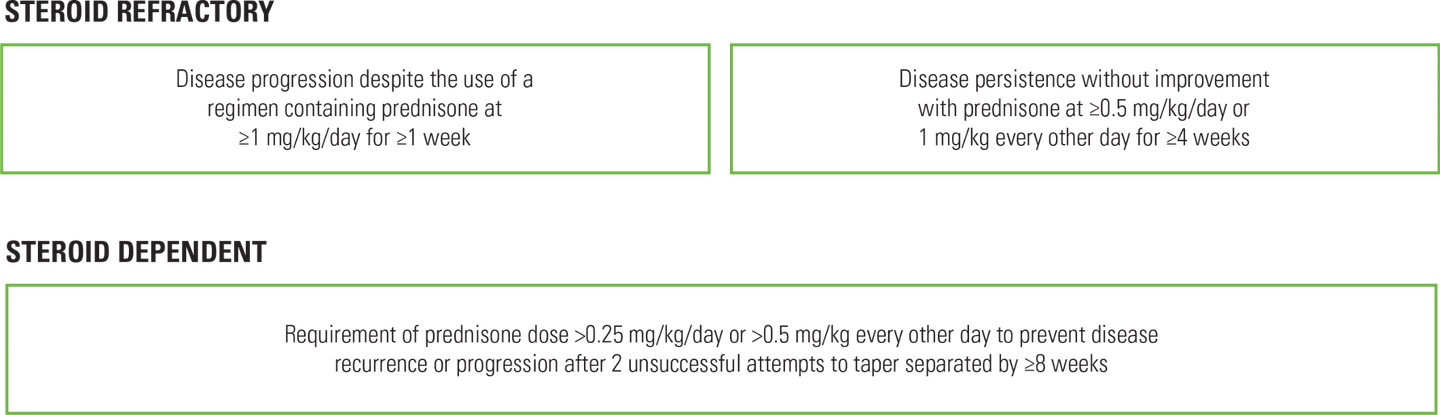
Identifying Patients With SR/SD cGVHD

NIH Consensus Criteria3

Steroid refractory or steroid dependent definitions graphic
steroid-failure-mobile-img
Karolina Faysman

If I don’t see at least some response within the first week or I am unable to taper steroid use, I intervene with Jakafi as opposed to taking the chance that the disease could become more severe.

Karolina Faysman, MSN, AOCNP, GVHD Expert

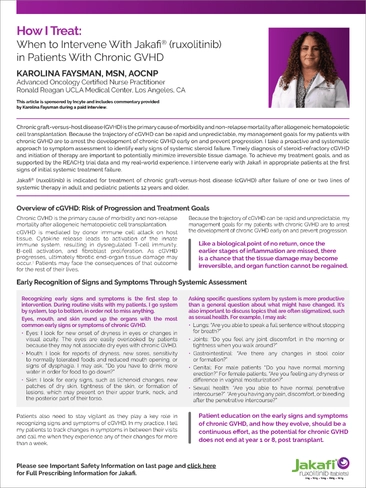
PDF download of Karolina Faysman whitepaper

How I Treat: When to Intervene With Jakafi® (ruxolitinib) in Patients With Chronic GVHD

Karolina Faysman, MSN, AOCNP 
GVHD Expert

Karolina Faysman, MSN, 
AOCNP 
GVHD Expert

DOWNLOAD THE PDF

The potential for irreversible organ damage makes timely diagnosis critical4-7

In a prospective single-center study of 115 patients who developed cGVHD beyond day 100 after hematopoietic stem cell transplant, maximum grade was reached at a median of 6 months (range, 1-16 months) after onset of cGVHD.8

Response to daily systemic steroids3,9
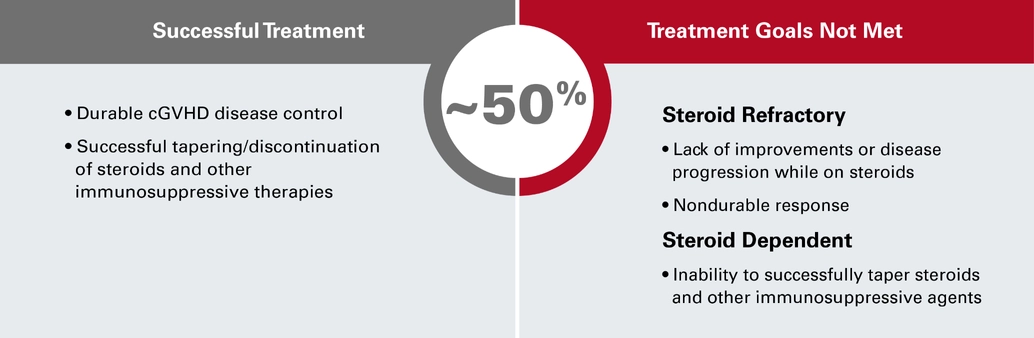
Steroid response chart

CI=confidence interval; cGVHD=chronic graft-versus-host disease; HR=hazard ratio; NIH=National Institutes of Health; SD=steroid dependent; SR=steroid refractory.

References: 1. Lueck C, Tzalavras A, Wohlfarth P, et al. Impact of chronic graft-versus-host-disease on intensive care outcome in allogeneic hematopoietic stem cell recipients. Bone Marrow Transplant. 2023;58(3):303-310. 2. Baumrin E, Baker LX, Byrne M, et al. Prognostic value of cutaneous disease severity estimates on survival outcomes in patients with chronic graft-vs-host disease. JAMA Dermatol. 2023;159(4):393-402. 3. Schoemans HM, Lee SJ, Ferrara JL, et al; for the EBMT Transplant Complications Working Party and the EBMT−NIH−CIBMTR GvHD Task Force. EBMT–NIH–CIBMTR Task Force position statement on standardized terminology & guidance for graft-versus-host disease assessment. Bone Marrow Transplant. 2018;53(11):1401-1415. 4. Lee SJ, Vogelsang G, Flowers MED. Chronic graft-versus-host disease. Biol Blood Marrow Transplant. 2003;9(4):215-233. 5. Lee SJ, Flowers MED. Recognizing and managing chronic graft-versus-host disease. Hematology Am Soc Hematol Educ Program. 2008;228(1):134-141. 6. Nassiri N, Eslani M, Panahi N, Mehravaran S, Ziaei A, Djalilian AR. Ocular graft versus host disease following allogeneic stem cell transplantation: a review of current knowledge and recommendations. J Ophthalmic Vis Res. 2013;8(4):351-358. 7. Hildebrandt GC, Fazekas T, Lawitschka A, et al. Diagnosis and treatment of pulmonary chronic GVHD: report from the consensus conference on clinical practice in chronic GVHD. Bone Marrow Transplant. 2011;46(10):1283-1295. 8. Kuzmina Z, Eder S, Böhm A, et al. Significantly worse survival of patients with NIH-defined chronic graft-versus-host disease and thrombocytopenia or progressive onset type: results of a prospective study. Leukemia. 2012;26(4):746-756. 9. MacDonald KPA, Betts BC, Couriel D. Emerging therapeutics for the control of chronic graft-versus-host disease. Biol Blood Marrow Transplant. 2018;24(1):19-26.

+

INDICATIONS AND USAGE

JAKAFI®/JAKAFI XR™ (ruxolitinib) is for treatment of intermediate or high-risk myelofibrosis (MF), including primary MF, post–polycythemia vera MF and post–essential thrombocythemia MF in adults.

JAKAFI/JAKAFI XR is for treatment of polycythemia vera (PV) in adults who have had an inadequate response to or are intolerant of hydroxyurea.

JAKAFI/JAKAFI XR is for treatment of steroid-refractory acute graft-versus-host disease (aGVHD) in adult and pediatric patients 12 years and older.

JAKAFI/JAKAFI XR is for treatment of chronic graft-versus-host disease (cGVHD) after failure of one or two lines of systemic therapy in adult and pediatric patients 12 years and older.

IMPORTANT SAFETY INFORMATION

Warnings and Precautions

Thrombocytopenia, Anemia and Neutropenia

  • JAKAFI/JAKAFI XR can cause dose-related effects of thrombocytopenia, anemia and neutropenia. Perform a pre-treatment complete blood count (CBC) and monitor CBCs every 2 to 4 weeks until doses are stabilized, and then as clinically indicated.
  • Manage thrombocytopenia by reducing the dose or temporarily interrupting JAKAFI/JAKAFI XR. Platelet transfusions may be necessary.
  • Patients developing anemia may require blood transfusions and/or dose modifications of JAKAFI/JAKAFI XR.
  • Severe neutropenia (ANC <0.5 × 10⁹/L) was generally reversible by withholding JAKAFI/JAKAFI XR until recovery.

Risk of Infection

Tuberculosis

  • Serious bacterial, mycobacterial, fungal and viral infections have occurred. Delay starting JAKAFI/JAKAFI XR until active serious infections have resolved. Observe patients receiving JAKAFI/JAKAFI XR for signs and symptoms of infection and manage promptly.
  • Tuberculosis (TB) infection with JAKAFI/JAKAFI XR has been reported. Observe patients taking JAKAFI/JAKAFI XR for signs and symptoms of active TB and manage promptly. Prior to initiating, evaluate patients for TB risk factors and test those at higher risk for latent infection. Consult a physician with expertise in the treatment of TB before starting in patients with evidence of active or latent TB. Continuation during treatment of active TB should be based on the overall risk-benefit determination.

Progressive Multifocal Leukoencephalopathy

  • Progressive multifocal leukoencephalopathy (PML) has occurred with JAKAFI/JAKAFI XR treatment. If PML is suspected, stop JAKAFI/JAKAFI XR and evaluate.

Herpes Zoster and Herpes Simplex

  • Herpes zoster infection, reactivation and/or dissemination has been reported in patients receiving JAKAFI/JAKAFI XR. Advise patients about early signs and symptoms of herpes zoster and seek treatment. Monitor patients for the development of herpes simplex infections. If a patient develops evidence of dissemination of herpes simplex, consider interrupting treatment.

Hepatitis B

  • Increases in hepatitis B viral load with or without associated elevations in alanine aminotransferase and aspartate aminotransferase have been reported in patients with chronic hepatitis B virus (HBV) infections.

Symptom Exacerbation Following Interruption or Discontinuation of Treatment

  • When discontinuing JAK-Inhibitors, including JAKAFI/JAKAFI XR, myeloproliferative neoplasm-related signs and symptoms may flare. After discontinuation, some patients with myelofibrosis have experienced fever, respiratory distress, hypotension, disseminated intravascular coagulation (DIC), or multi-organ failure. If any of these occur after discontinuation or while tapering JAKAFI/JAKAFI XR, evaluate and treat any intercurrent illness and consider restarting or increasing the dose. Instruct patients not to interrupt or discontinue JAKAFI/JAKAFI XR without consulting their physician. When discontinuing or interrupting JAKAFI/JAKAFI XR for reasons other than life-threatening toxicities, consider gradual tapering rather than abrupt discontinuation.

Non-Melanoma Skin Cancer (NMSC)

  • NMSC including basal cell, squamous cell, and Merkel cell carcinoma have occurred. Perform periodic skin examinations.

Lipid Elevations

  • Treatment with JAKAFI/JAKAFI XR has been associated with increases in total cholesterol, low-density lipoprotein cholesterol, and triglycerides. Assess lipid parameters 8-12 weeks after initiation.

Major Adverse Cardiovascular Events (MACE)

  • Another JAK-inhibitor has increased the risk of major adverse cardiovascular events (MACE), including cardiovascular death, myocardial infarction, and stroke (compared to those treated with TNF blockers), in patients with rheumatoid arthritis, a condition for which JAKAFI/JAKAFI XR is not indicated. Consider the benefits and risks for the individual patient prior to initiating or continuing therapy, particularly in patients who are current or past smokers and patients with other cardiovascular risk factors. Patients should be informed about the symptoms of serious cardiovascular events and the steps to take if they occur.

Thrombosis

  • Another JAK-inhibitor has increased the risk of thrombosis, including deep venous thrombosis (DVT), pulmonary embolism (PE), and arterial thrombosis (compared to those treated with TNF blockers), in patients with rheumatoid arthritis, a condition for which JAKAFI/JAKAFI XR is not indicated. In patients with myelofibrosis (MF) and polycythemia vera (PV), the rates of thromboembolic events were similar in JAKAFI/JAKAFI XR and control treated patients. Patients with symptoms of thrombosis should be promptly evaluated and treated appropriately.

Secondary Malignancies

  • Another JAK-inhibitor has increased the risk of lymphoma and other malignancies, excluding NMSC (compared to those treated with TNF blockers), in patients with rheumatoid arthritis, a condition for which JAKAFI/JAKAFI XR is not indicated. Patients who are current or past smokers are at additional increased risk.

Adverse Reactions

  • In myelofibrosis, the most common hematologic adverse reactions (incidence >20%) were thrombocytopenia and anemia. The most common nonhematologic adverse reactions (incidence ≥15%) were bruising, dizziness, headache and diarrhea.
  • In polycythemia vera, the most common hematologic adverse reactions (incidence >20%) were thrombocytopenia and anemia. The most common nonhematologic adverse reactions (incidence ≥15%) were bruising, dizziness, headache and diarrhea.
  • In acute graft-versus-host disease, the most common hematologic adverse reactions (incidence >50%) were anemia, thrombocytopenia and neutropenia. The most common nonhematologic adverse reactions (incidence >50%) were infections (pathogen not specified) and edema.
  • In chronic graft-versus-host disease, the most common hematologic adverse reactions (incidence >35%) were anemia and thrombocytopenia. The most common nonhematologic adverse reactions (incidence ≥20%) were infections (pathogen not specified) and viral infections.

Drug Interactions

  • Avoid concomitant use with fluconazole doses greater than 200 mg. Dose modifications may be required when administering fluconazole doses of 200 mg or less, or with strong CYP3A4 inhibitors, or in patients with renal or hepatic impairment. Patients should be closely monitored and the dose titrated based on safety and efficacy.

Pregnancy

  • Use during pregnancy is not recommended and should only be used if the potential benefit justifies the potential risk to the fetus. Women taking JAKAFI/JAKAFI XR should not breastfeed during treatment and for 2 weeks after the final dose.

Please see Full Prescribing Information for JAKAFI and JAKAFI XR.

INDICATIONS AND USAGE

JAKAFI®/JAKAFI XR™ (ruxolitinib) is for treatment of intermediate or high-risk myelofibrosis (MF), including primary MF, post–polycythemia vera MF and post–essential thrombocythemia MF in adults.

JAKAFI/JAKAFI XR is for treatment of polycythemia vera (PV) in adults who have had an inadequate response to or are intolerant of hydroxyurea.

JAKAFI/JAKAFI XR is for treatment of steroid-refractory acute graft-versus-host disease (aGVHD) in adult and pediatric patients 12 years and older.

JAKAFI/JAKAFI XR is for treatment of chronic graft-versus-host disease (cGVHD) after failure of one or two lines of systemic therapy in adult and pediatric patients 12 years and older.

IMPORTANT SAFETY INFORMATION

Warnings and Precautions

Thrombocytopenia, Anemia and Neutropenia

  • JAKAFI/JAKAFI XR can cause dose-related effects of thrombocytopenia, anemia and neutropenia. Perform a pre-treatment complete blood count (CBC) and monitor CBCs every 2 to 4 weeks until doses are stabilized, and then as clinically indicated.
  • Manage thrombocytopenia by reducing the dose or temporarily interrupting JAKAFI/JAKAFI XR. Platelet transfusions may be necessary.
  • Patients developing anemia may require blood transfusions and/or dose modifications of JAKAFI/JAKAFI XR.
  • Severe neutropenia (ANC <0.5 × 10⁹/L) was generally reversible by withholding JAKAFI/JAKAFI XR until recovery.

Risk of Infection

Tuberculosis

  • Serious bacterial, mycobacterial, fungal and viral infections have occurred. Delay starting JAKAFI/JAKAFI XR until active serious infections have resolved. Observe patients receiving JAKAFI/JAKAFI XR for signs and symptoms of infection and manage promptly.
  • Tuberculosis (TB) infection with JAKAFI/JAKAFI XR has been reported. Observe patients taking JAKAFI/JAKAFI XR for signs and symptoms of active TB and manage promptly. Prior to initiating, evaluate patients for TB risk factors and test those at higher risk for latent infection. Consult a physician with expertise in the treatment of TB before starting in patients with evidence of active or latent TB. Continuation during treatment of active TB should be based on the overall risk-benefit determination.

Progressive Multifocal Leukoencephalopathy

  • Progressive multifocal leukoencephalopathy (PML) has occurred with JAKAFI/JAKAFI XR treatment. If PML is suspected, stop JAKAFI/JAKAFI XR and evaluate.

Herpes Zoster and Herpes Simplex

  • Herpes zoster infection, reactivation and/or dissemination has been reported in patients receiving JAKAFI/JAKAFI XR. Advise patients about early signs and symptoms of herpes zoster and seek treatment. Monitor patients for the development of herpes simplex infections. If a patient develops evidence of dissemination of herpes simplex, consider interrupting treatment.

Hepatitis B

  • Increases in hepatitis B viral load with or without associated elevations in alanine aminotransferase and aspartate aminotransferase have been reported in patients with chronic hepatitis B virus (HBV) infections.

Symptom Exacerbation Following Interruption or Discontinuation of Treatment

  • When discontinuing JAK-Inhibitors, including JAKAFI/JAKAFI XR, myeloproliferative neoplasm-related signs and symptoms may flare. After discontinuation, some patients with myelofibrosis have experienced fever, respiratory distress, hypotension, disseminated intravascular coagulation (DIC), or multi-organ failure. If any of these occur after discontinuation or while tapering JAKAFI/JAKAFI XR, evaluate and treat any intercurrent illness and consider restarting or increasing the dose. Instruct patients not to interrupt or discontinue JAKAFI/JAKAFI XR without consulting their physician. When discontinuing or interrupting JAKAFI/JAKAFI XR for reasons other than life-threatening toxicities, consider gradual tapering rather than abrupt discontinuation.

Non-Melanoma Skin Cancer (NMSC)

  • NMSC including basal cell, squamous cell, and Merkel cell carcinoma have occurred. Perform periodic skin examinations.

Lipid Elevations

  • Treatment with JAKAFI/JAKAFI XR has been associated with increases in total cholesterol, low-density lipoprotein cholesterol, and triglycerides. Assess lipid parameters 8-12 weeks after initiation.

Major Adverse Cardiovascular Events (MACE)

  • Another JAK-inhibitor has increased the risk of major adverse cardiovascular events (MACE), including cardiovascular death, myocardial infarction, and stroke (compared to those treated with TNF blockers), in patients with rheumatoid arthritis, a condition for which JAKAFI/JAKAFI XR is not indicated. Consider the benefits and risks for the individual patient prior to initiating or continuing therapy, particularly in patients who are current or past smokers and patients with other cardiovascular risk factors. Patients should be informed about the symptoms of serious cardiovascular events and the steps to take if they occur.

Thrombosis

  • Another JAK-inhibitor has increased the risk of thrombosis, including deep venous thrombosis (DVT), pulmonary embolism (PE), and arterial thrombosis (compared to those treated with TNF blockers), in patients with rheumatoid arthritis, a condition for which JAKAFI/JAKAFI XR is not indicated. In patients with myelofibrosis (MF) and polycythemia vera (PV), the rates of thromboembolic events were similar in JAKAFI/JAKAFI XR and control treated patients. Patients with symptoms of thrombosis should be promptly evaluated and treated appropriately.

Secondary Malignancies

  • Another JAK-inhibitor has increased the risk of lymphoma and other malignancies, excluding NMSC (compared to those treated with TNF blockers), in patients with rheumatoid arthritis, a condition for which JAKAFI/JAKAFI XR is not indicated. Patients who are current or past smokers are at additional increased risk.

Adverse Reactions

  • In myelofibrosis, the most common hematologic adverse reactions (incidence >20%) were thrombocytopenia and anemia. The most common nonhematologic adverse reactions (incidence ≥15%) were bruising, dizziness, headache and diarrhea.
  • In polycythemia vera, the most common hematologic adverse reactions (incidence >20%) were thrombocytopenia and anemia. The most common nonhematologic adverse reactions (incidence ≥15%) were bruising, dizziness, headache and diarrhea.
  • In acute graft-versus-host disease, the most common hematologic adverse reactions (incidence >50%) were anemia, thrombocytopenia and neutropenia. The most common nonhematologic adverse reactions (incidence >50%) were infections (pathogen not specified) and edema.
  • In chronic graft-versus-host disease, the most common hematologic adverse reactions (incidence >35%) were anemia and thrombocytopenia. The most common nonhematologic adverse reactions (incidence ≥20%) were infections (pathogen not specified) and viral infections.

Drug Interactions

  • Avoid concomitant use with fluconazole doses greater than 200 mg. Dose modifications may be required when administering fluconazole doses of 200 mg or less, or with strong CYP3A4 inhibitors, or in patients with renal or hepatic impairment. Patients should be closely monitored and the dose titrated based on safety and efficacy.

Pregnancy

  • Use during pregnancy is not recommended and should only be used if the potential benefit justifies the potential risk to the fetus. Women taking JAKAFI/JAKAFI XR should not breastfeed during treatment and for 2 weeks after the final dose.

Please see Full Prescribing Information for JAKAFI and JAKAFI XR.